







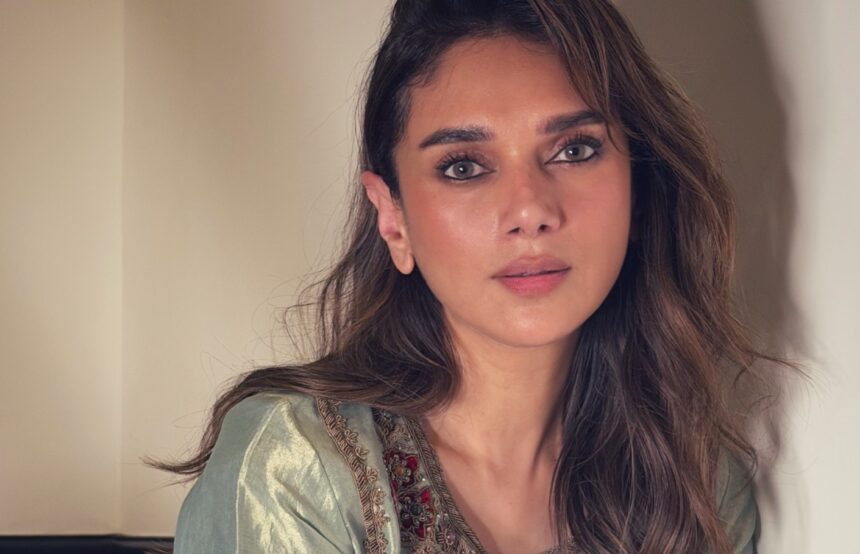
Aditi Rao Hydari’s latest ethnic looks offer two distinct festive styling ideas — a delicately embroidered sage gharara and a dramatic red choga ensemble that blends traditional craftsmanship with contemporary elegance.
Aditi Rao Hydari has a knack for making traditional Indian fashion feel both timeless and current. Whether she is wearing a flowing sharara, an ornate gharara or a classic lehenga, the actor often leans into silhouettes that carry a sense of history while keeping the overall styling refreshingly understated.
Her latest fashion outing offers exactly that. In a recent photo series, Aditi showcased two distinctly different ethnic ensembles that could easily inspire festive wardrobes this season.
One was soft, muted and intricately detailed. The other embraced rich colour and old-world grandeur.
Aditi Rao Hydari wears a sage silk-tissue gharara
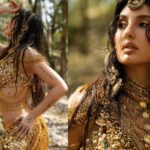
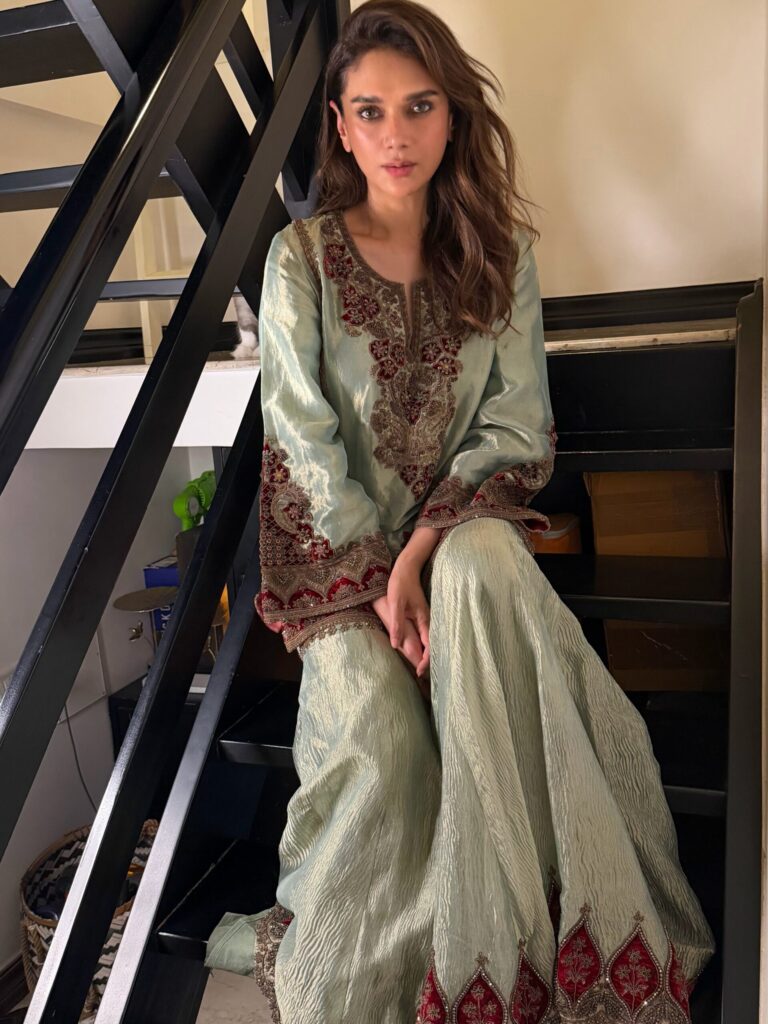
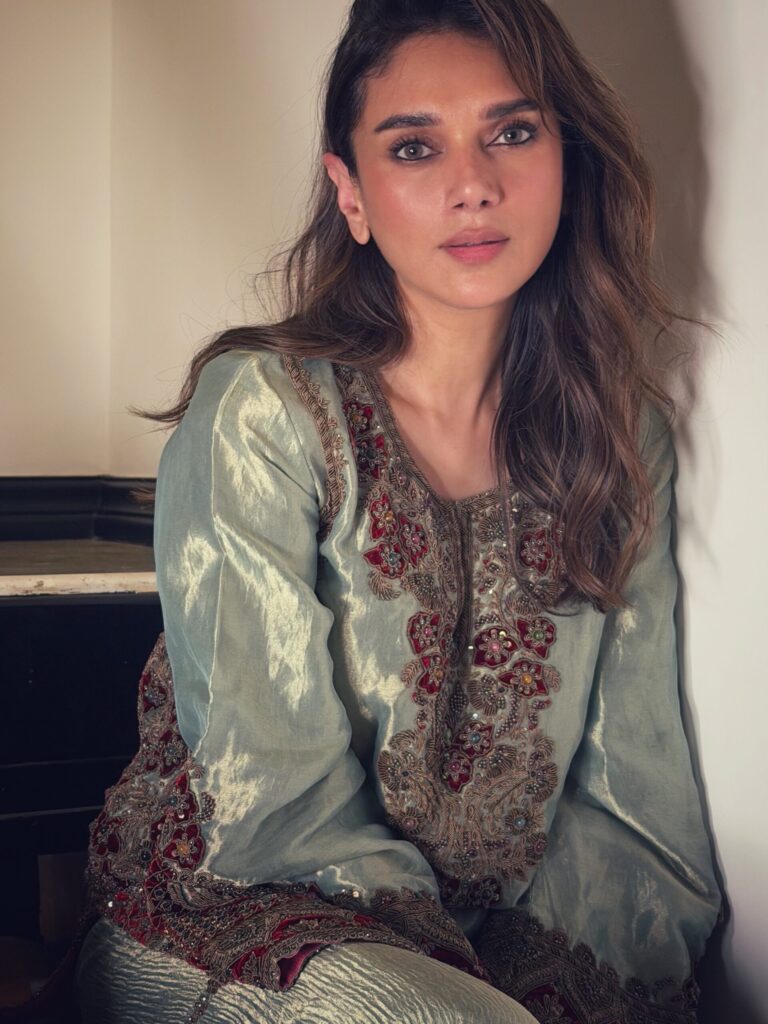
For her first look, Aditi chose a sage-coloured gharara crafted in silk tissue.
The ensemble featured intricate hand embroidery, including dabka and jaal work, by designer Preeti Kler. The muted sage base allowed the craftsmanship to take centre stage, while touches of maroon and gold introduced contrast to the otherwise soft palette.
The result was an outfit that balanced comfort with couture-style detailing.
Rather than relying on an abundance of accessories or dramatic styling, the look allowed the silhouette and embroidery to do most of the work.
The combination makes the outfit particularly relevant for festive occasions where traditional dressing is expected but an overly heavy ensemble may not be desirable.
The history behind the gharara
The gharara has a long history in South Asian fashion and is particularly associated with the culture of 19th-century Awadh.
The silhouette was traditionally worn by Muslim aristocratic families and gradually became associated with weddings, celebrations and other formal occasions.
Its defining feature is the construction of the trousers. Unlike a conventional wide-legged pair of pants, a traditional gharara is fitted around the upper leg before opening dramatically below the knee.
The gathered and flared construction creates the distinctive movement for which the garment is known.
Historian Rana Safvi has described the traditional gharara as comprising a short kurti, dupatta and wide-legged trousers that are ruched around the knee to create the dramatic flare.
The knee section, known as the gote in Urdu, could feature elaborate zari and zardozi embellishment.
The amount of fabric traditionally used also made the garment a substantial undertaking in terms of craftsmanship.
Gharara vs sharara: What’s the difference?
Although the terms are frequently used interchangeably today, ghararas and shararas have different constructions.
A gharara generally remains fitted through the upper leg and flares outward from around the knee.
A sharara, by contrast, typically begins flaring from the waist or hip area.
That difference changes the way each garment falls and moves.
For anyone looking to recreate Aditi’s festive aesthetic, understanding the distinction can help when selecting the right silhouette.
The gharara offers a more structured, dramatic flare, while a sharara generally creates a continuous wide-leg effect from higher up the body.

Aditi turns up the drama in a red choga
Aditi’s second outfit takes a completely different approach.
The actor wore a red tissue Ghingham Choga by Heena Kochhar, paired with a matching red mashroo salwar.
The choga featured detailed zari, sitara and ari embroidery, creating a richly textured finish across the monochromatic ensemble.
Where the sage gharara relied on subtlety, this outfit embraced colour and ornamentation.
The vivid red palette gives the ensemble a distinctly festive character, while the tissue fabric keeps the overall silhouette light rather than visually heavy.

The choga brings old-world glamour to festive dressing
The choga is a traditional flowing outer garment that can add considerable drama to an ethnic look without requiring multiple layers of clothing.
In Aditi’s styling, the tissue construction gives the garment an airy quality, while the embroidery adds depth and visual richness.
The matching red salwar keeps the palette cohesive and allows the choga to remain the focal point.
It is a useful styling direction for anyone who wants a festive outfit that feels traditional without defaulting to the more familiar lehenga or sari.

Two Aditi Rao Hydari looks, two festive moods
Aditi’s two ensembles demonstrate how dramatically the mood of traditional clothing can change through colour, fabric and silhouette.
The sage gharara is soft, romantic and restrained. Its muted colour palette and detailed handwork make it suitable for daytime celebrations, intimate festive gatherings or occasions where understated elegance is the goal.
The red choga, meanwhile, is more theatrical. Its monochromatic palette, ornate embroidery and flowing construction make it better suited to an evening celebration or a more formal festive event.
Yet both looks share the same design philosophy: traditional silhouettes are allowed to remain the stars.
Why Aditi’s ethnic style continues to stand out
Aditi Rao Hydari’s ethnic fashion choices often work because they do not appear excessively constructed.
Even when the garments involve elaborate embroidery or historically rooted silhouettes, the styling tends to retain a sense of softness.
That quality is particularly visible in these two looks.
The gharara feels delicate without becoming overly ornate, while the red choga embraces grandeur without appearing weighed down by it.
For the upcoming festive season, the message from Aditi’s wardrobe is relatively simple: traditional fashion does not have to mean predictable dressing.
A muted palette can make elaborate craftsmanship feel modern, while a single bold colour can transform a classic silhouette into a statement look.